Prompt Engineering: Practical Best Practices That Actually Work
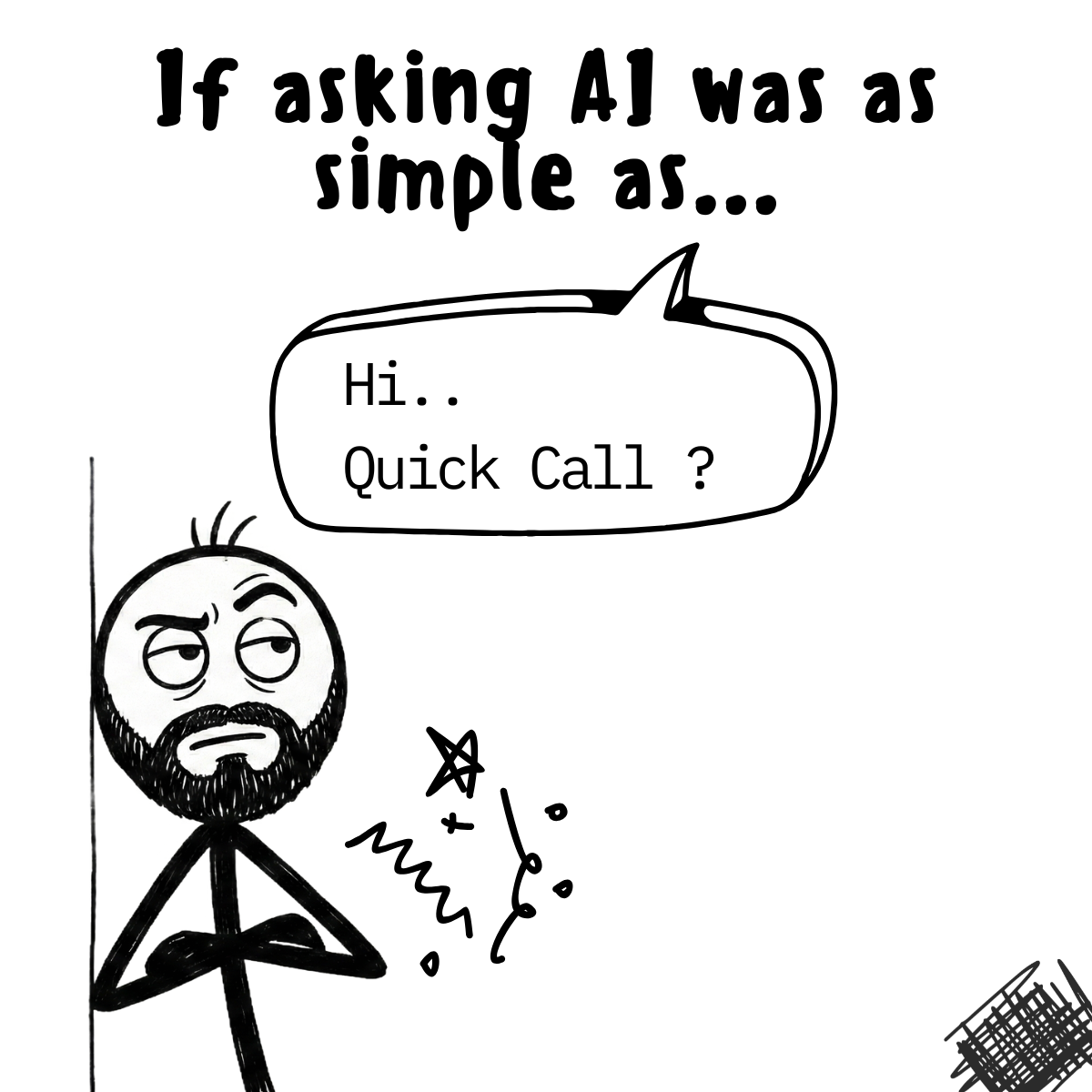
Communicating with AI is the same as communicating with Humans. ~ Clarity Helps ~ The quality of output depends heavily on how well the task is explained.
🗣️ Be clear and specific
- Don’t assume the AI knows what you want.
- Tell it exactly what to do—no guessing, no ambiguity.
🎭 Asking a model to adopt a persona can help the model use the right perspective to answer your queries.
📋 Show examples and format Providing an example can nudge the model toward the response you want.
📚 Provide enough context When models are given the right reference information, they perform significantly better and are less likely to hallucinate. If the task relates to a document, dataset, or prior discussion—include it. Context matters.
🧩 Break big tasks into small ones Instead of one huge prompt, split it: Step 1: Understand Step 2: Analyze Step 3: Answer
This improves accuracy and structure.
⏳ Give the model time to think Encourage step-by-step reasoning using techniques like chain-of-thought or self-critique prompting. This allows the model to reason more deliberately rather than rushing to an answer.
🔁 Iterate and refine Your first prompt doesn’t have to be perfect. Treat prompts like code—test, improve, repeat.
❌ Unclear prompt:
Analyze our customer feedback.
✅ Well-structured business prompt:
You are a product manager analyzing customer feedback for a SaaS product. Review the feedback provided below and identify the top 3 recurring issues. For each issue, suggest one actionable improvement and its potential business impact. Present the output in a table with columns: Issue, Suggested Action, Expected Impact. Keep the analysis concise and data-driven.
💡 Key takeaway: Prompt engineering is a skill. Clear instructions, sufficient context, and structured thinking dramatically improve the quality and reliability of AI responses.